 GameWave
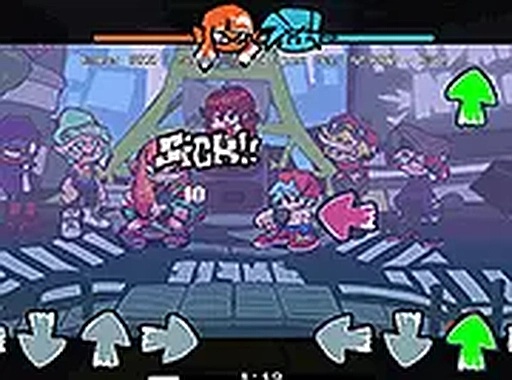
Ink Splat Rhythm Game keeps its scope narrow: one song, keyboard timing, and a colorful ink aesthetic. That restraint works in its favor for short breaks, since there is no progression system to manage and no download required. Beginners can learn the beat-matching loop quickly, while experienced players can push for cleaner hits. The main limitation is content depth, as a single track will not sustain long play sessions for everyone.
Ink Splat Rhythm Game strips rhythm gaming down to its most direct form: notes scroll across the screen, and you press the corresponding keyboard keys the moment each note reaches its target area. There is one complete song to play through, not a playlist or a campaign. That single-track structure means every attempt is about tightening your timing rather than unlocking new content. The scoring rewards precision, so a note pressed slightly early or late registers differently than a clean hit.
The visuals borrow from a colorful ink-themed world, with cheerful characters and environments that keep the screen busy but readable. That aesthetic isn't just decoration; in a rhythm game, background clutter can pull your eyes away from incoming notes. The ink-splat styling stays vivid without obscuring the note lane, which supports the core task of tracking timing cues. Fans of the referenced series will recognize the crossover appeal, though the game stands on its own as a timing exercise.
The game is built for desktop computers with a keyboard or mouse, and it includes a full-screen button for a larger view. Full screen matters here because a wider view makes the scrolling notes easier to read at speed. There are no downloads and no setup beyond opening the browser. The control scheme is simple to grasp, but the timing window demands focus, which is where the real difficulty lives.
Because there is only one song and no lengthy progression, Ink Splat Rhythm Game suits short sessions. Beginners can practice matching the beat without learning complex inputs, while experienced rhythm players can chase higher accuracy scores. The challenge scales with your own precision rather than with added mechanics, so improvement comes from repetition and attention to the music's rhythm.
Sign in to comment
You must be logged in before posting a review or rating.
No comments yet. Be the first to comment!





Editorial Notes