 GameWave
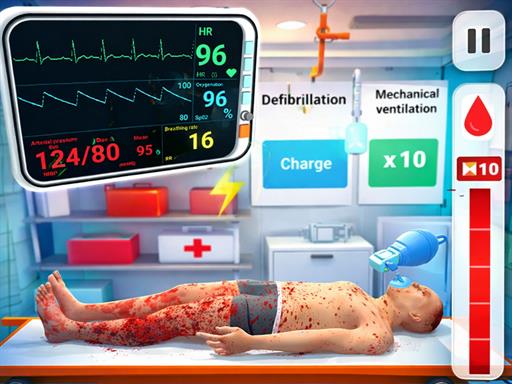
Doctor Emergency Hospital Simulator targets players who want a methodical medical sim rather than an action game. Its five-course structure and unlock system give clear progression, while the saved-versus-lost counter creates steady pressure. The 3D body models and tool-based treatments add authenticity. The main limitation is that it is explicitly for entertainment, not education, so it should not be treated as a training tool. Mobile and tablet players comfortable with procedure-based gameplay will get the most from it.
Doctor Emergency Hospital Simulator begins with Course 0, a theory module covering the brain, lungs, and heart. That foundation matters because the game unlocks content in layers: five courses in total, each adding diseases and treatment options. By the end, more than 20 conditions and 17 medical aids become available. The structure rewards steady progress rather than rushing into complex cases with incomplete knowledge.
Treatment happens through a hangar of medical equipment. Patches, defibrillators, and oxygen masks are among the tools you apply to realistic body models. Injections come from the medical aid list, and procedures include heart massage and defibrillation. Each action maps to a specific condition, so success depends on matching symptoms to the right combination of aids and tools. The 3D body structures and disease models are built on popular medical science, though the game is designed for entertainment rather than as educational material.
After each day, you earn resources to buy better equipment and medical aids. That creates a practical tension: spend on tools for common conditions or save for advanced gear that handles rarer cases. The core scoreboard is simple—your saved counter must stay higher than the other counter. Losing patients eats into that margin, so efficient diagnosis and timely intervention matter more than expensive equipment alone.
The game is built for mobile and tablet devices with a 3D visual experience. Touch controls suit the procedure-based actions, and the course structure fits short sessions. Realistic patient scenarios test decision-making, and each new day presents different cases, so adapting your approach matters as much as memorizing treatments.
Sign in to comment
You must be logged in before posting a review or rating.
No comments yet. Be the first to comment!










Editorial Notes