 GameWave
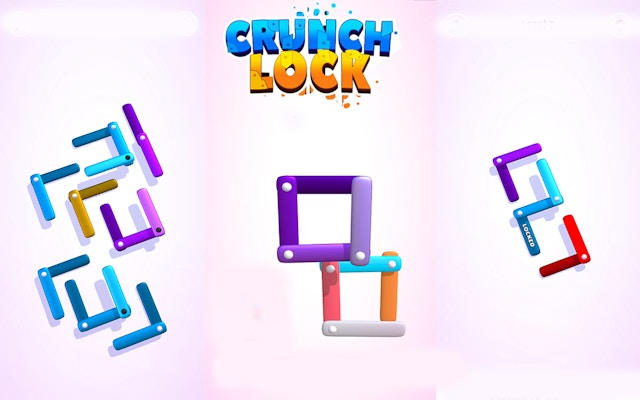
Fastener Puzzle: Sequential Reasoning strips puzzle games down to pure logic. The goal is simple—remove all fasteners in the right order—but the blocking mechanic forces you to think ahead. Early levels teach the basics, while later ones demand backtracking and patience. The minimal interface and lack of timers make it accessible to children and adults alike. Its main limitation is that it offers no speed or reflex challenges, so players seeking action may find it too slow. For those who enjoy meditative problem-solving, it delivers a satisfying mental workout.
Every board in Fastener Puzzle: Sequential Reasoning presents a set of fasteners that must be unscrewed and removed. The catch is that fasteners can block access to one another. Removing one in the wrong order can make others impossible to reach, so you need to map out the dependencies before making a move. The game rewards observation over reflexes.
Early levels use a handful of fasteners in simple patterns, letting you learn the rules without pressure. As you advance, layouts become more tangled. Later puzzles may require you to backtrack or rethink your sequence after a misstep. The difficulty rises steadily but never spikes, so each new stage feels like a fresh test of your planning rather than a repeat of earlier ones.
The interface stays out of the way: a clean board with clear visual cues for each fastener. To play, you tap or click a tool, then select the fastener you want to remove. The game responds immediately, showing the result of each action. That direct feedback keeps your attention on the logical sequence instead of on menus or timers.
With no violence, adult themes, or complex language, the game suits all ages. Younger players can handle the early levels as an introduction to logical thinking, while adults will find the later puzzles genuinely challenging. The absence of time limits makes it a relaxing choice for casual play, yet the growing complexity keeps dedicated puzzle fans engaged.
Sign in to comment
You must be logged in before posting a review or rating.
No comments yet. Be the first to comment!












Editorial Notes