 GameWave
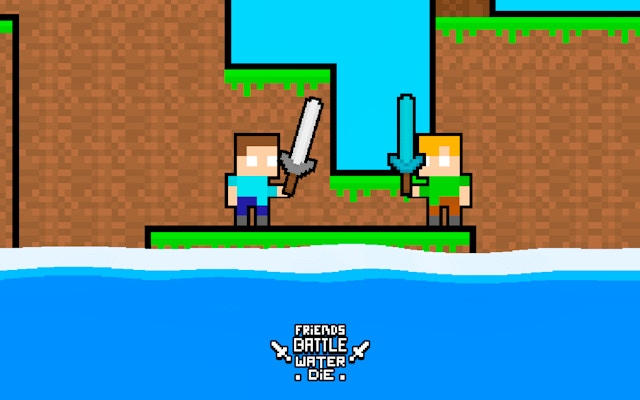
Rising Tide Duel Arena works because its two core rules reinforce each other: ten hits to win, and a floor that never stops rising. The shrinking arena prevents defensive stalling and gives each short round a natural arc. Pixel visuals keep the action readable, and the shared-keyboard setup makes it easy to start. The main limitation is that it is strictly a local two-player experience, so it will not appeal to anyone looking for solo play.
Rising Tide Duel Arena strips the fighting genre down to a single clear goal: land ten successful hits on your opponent before they land ten on you. The match ends the instant either player reaches that number, so there is no health bar to chip away at and no comeback window after the tenth hit. Two players share one keyboard, each using a separate set of keys for movement and attacking. Because rounds are brief, the game naturally encourages immediate rematches and a friendly competitive rhythm rather than long, drawn-out sessions.
[IMG_1] The arena floor climbs steadily as the match progresses. That single mechanic changes how the fight plays out: the safe area shrinks, corners become more dangerous, and players who rely on passive spacing eventually run out of room. Aggression has a cost, but so does hesitation. The rising tide forces both players to make decisions about when to commit to an attack and when to reposition, and it keeps the final seconds of a close match tense even after both players understand the controls.
Each player uses a dedicated set of keyboard keys for movement and attacking, with no complex menu system or tutorial to work through. That simplicity makes the game easy to pick up for newcomers, but the ten-hit target and the shrinking arena create enough depth for experienced players to focus on timing, spacing, and reading their opponent's habits.
[IMG_2] The pixel art style gives Rising Tide Duel Arena a classic arcade look. Character sprites and arena boundaries are kept clean and readable so players can track both fighters during fast exchanges. The visuals stay out of the way of the action, which matters in a game where a single missed hit can decide a round.
Winning consistently depends on more than fast inputs. Anticipating an opponent's movement and using the rising floor to cut off their options can create openings for decisive hits. Forcing someone into a tight space is often more effective than trading hits in open ground. Staying calm and focusing on clean connections tends to produce better results than rushing, and repeated matches against the same opponent help players recognize patterns and adjust their approach.
Sign in to comment
You must be logged in before posting a review or rating.
No comments yet. Be the first to comment!











Editorial Notes