 GameWave
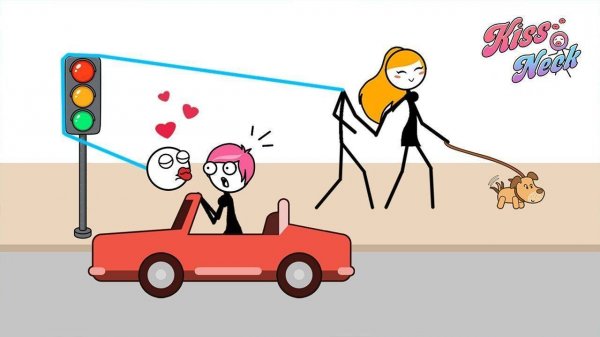
Necky Quest takes a single idea—stretch the neck, release to snap forward—and builds varied puzzles around it. Bouncing surfaces and redirecting obstacles turn each stage into a small experiment in angle and force. The cartoonish visuals and exaggerated reactions keep failure light, while non-linear layouts reward patience and creative thinking. It suits casual players and families who want a low-pressure challenge rather than a punishing test of precision.
Necky Quest is built around one action: drag the character's head with your finger or mouse. The neck stretches like a rubber band, and when you let go, the head snaps forward, pulling the body toward the target. The mechanic is simple to grasp, but levels introduce new angles and distances that force you to think about direction and force before releasing.
Each stage has a unique layout with objects that either block your path or help you. Some surfaces bounce the head; others redirect its trajectory. Finding the right stretch angle and power often takes several attempts, and the environment encourages you to experiment rather than follow a single solution.
The game uses a lighthearted, cartoonish art style with exaggerated character reactions. Silly physics and humorous scenarios keep the mood playful, so a failed attempt feels like part of the fun rather than a punishment. Clean, colorful visuals suit players of all ages.
New elements appear gradually as you advance, keeping the gameplay fresh. Some levels demand precise timing, while others reward creative solutions. Failure is not harshly punished, which makes the game accessible to casual players and still satisfying for those who want a challenge.
Controls are intuitive and need no complex instructions. The puzzles are non-linear, so you can solve them your own way, which promotes creative thinking and patience. There is no violent or inappropriate content, making it easy for children and adults to play together.
Sign in to comment
You must be logged in before posting a review or rating.
No comments yet. Be the first to comment!









Editorial Notes