One-Button Jumping with Real Consequences
Present Platform Leap Challenge reduces its control scheme to a single action: tap or click to make the present hop. That simplicity puts all the weight on timing. Platforms can be stationary, slide horizontally, or shrink after you land. A jump that starts too early or too late ends the run. The game rewards measured inputs and makes rushed taps feel immediately costly, which creates a steady loop of attempt, adjust, and retry.
How Platform Types Change Your Approach
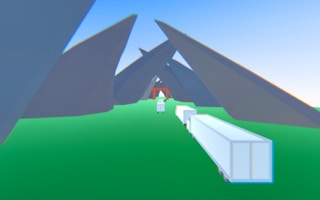
Early levels use fixed platforms, letting you calibrate jump distance without pressure. Moving platforms arrive next, so you have to read their direction and speed before committing. Later, shrinking platforms force quick follow-up jumps because the safe area disappears under your feet. Each new platform behavior builds on the previous one, so the difficulty rises without sudden spikes. The goal in every level is the same: reach the large tree at the end.
Festive Visuals and Clear Feedback
The present character bounces with a cheerful animation, and the backgrounds use soft gradients with subtle decorations that shift between level sets. Bright colors set a festive tone without visual clutter. Successful landings and missed jumps are signaled clearly, so you can tell what went wrong at a glance. That feedback matters in a precision game, where understanding a mistake is the first step to correcting it.
Designed for Short Sessions and Steady Improvement
There are no complex menus or button combinations to learn. You can start playing within seconds, which suits young children and adults equally. Because levels are short, the game fits easily into a break. Replaying a level to chase a clean run without missed jumps is a natural goal, and the rising speed and complexity of platform patterns give that replay purpose. Over multiple sessions, timing and reflexes tend to sharpen as you internalize the jump distances.
Compatibility
💻 Desktop | 📱 Mobile | 📟 Tablet
– All supported · Best with Chrome or Safari
 GameWave










Editorial Notes