 GameWave
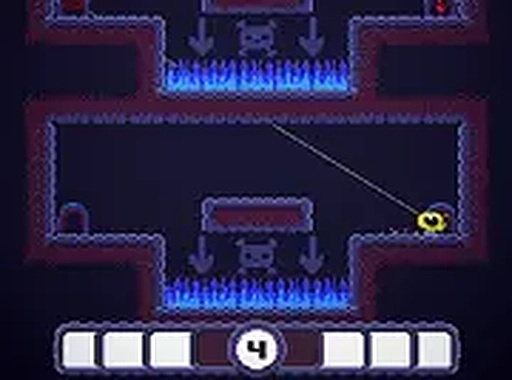
Linked Souls Dungeon Escape stands out for making the environment itself the solution: walls and platforms shield characters from the soul's path, so each level becomes a spatial reasoning exercise. The fixed transfer timer creates a steady rhythm, and the control switch between characters adds a layer of coordination that grows more demanding as levels combine obstacles. It is best suited to players who enjoy logic puzzles and careful planning rather than reflex-driven platforming. The dark dungeon theme supports the escape premise without distracting from the mechanics.
Linked Souls Dungeon Escape builds its puzzles around a single rule: two characters share one soul, and that soul moves between them on a fixed timer. When the transfer happens, any character caught in the soul's path ends the attempt. You cannot simply rush forward. Every step must account for where both bodies will be when the soul travels next.
Walls, platforms, and other dungeon structures double as shields. A pillar that blocks movement can also block the soul's trajectory, letting you position one character safely while the other advances. The environment is not just an obstacle course; it is the primary problem-solving resource. Recognizing which surfaces protect and which expose your characters is the core skill the game asks you to develop.
Only one character moves at a time, and control switches when the soul moves. That creates a rhythm: move, wait, switch, reposition. Early levels give you room to learn this cadence. Later stages tighten the timer and stack multiple hazards, so you must anticipate soul movements several steps ahead rather than reacting in the moment. The difficulty curve rewards practice and deliberate planning over quick reflexes.
The game uses a dark, atmospheric dungeon setting that matches its escape premise. Input is designed for desktop, with keyboard and mouse controls. A full-screen mode is available to reduce visual distractions, which helps when you need to track both characters and the soul's path at the same time.
Sign in to comment
You must be logged in before posting a review or rating.
No comments yet. Be the first to comment!








Editorial Notes