 GameWave
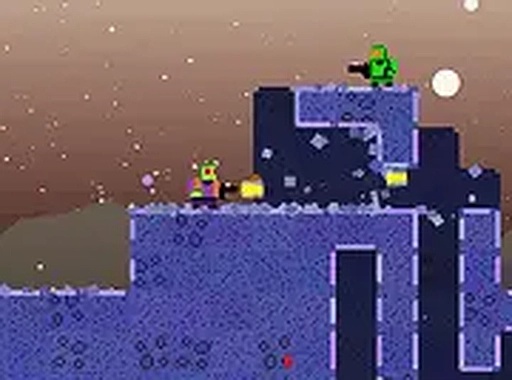
Stellar Frontier Guardian offers a focused desktop-only experience where procedural generation keeps each mission unpredictable. The clone system lowers the penalty for failure, making it approachable for players who prefer experimentation over strict punishment. The reliance on keyboard and mouse controls suits precise aiming, though the game's browser-based nature may limit visual fidelity. It is best suited for players who enjoy tactical adaptation and repeated runs rather than scripted campaigns.
Each mission in Stellar Frontier Guardian places you on a procedurally generated planet with a clear objective: find and neutralize enemy outposts. The layout of terrain, obstacles, and enemy positions changes every playthrough, so you cannot rely on memorized routes. Objectives are presented at the start of each mission, and completing them advances the campaign. Because no two planets are identical, you must assess new terrain and adjust your approach on the fly. This structure supports repeated playthroughs without the repetition of fixed level designs.
Stellar Frontier Guardian is built exclusively for desktop computers and runs directly in a web browser. You control your character through 2D or isometric environments using the keyboard for movement and dodging, and the mouse for aiming at distant targets. The control scheme is responsive, allowing quick reactions during encounters. Full-screen mode is supported, and the interface keeps health, clone count, and mission objectives visible without cluttering the screen. No downloads or installations are required, making it accessible from any compatible computer.
A defining feature is the clone system. You begin each campaign with a limited number of clones. When your primary character is defeated, a clone deploys and continues from the last checkpoint. Successfully completing a mission replenishes your clone count, allowing sustained progress even after setbacks. This mechanic reduces frustration and encourages experimentation, since failure does not force a full restart. However, clones are a finite resource within a mission, so you must decide when to take risks and when to play conservatively to preserve them.
Procedurally generated maps are the cornerstone of replayability. Each new game arranges obstacles, enemy bases, and resources differently. Some planets feature open areas that favor ranged combat, while others have tight corridors requiring close-quarters maneuvering. Objective placement also varies, turning route planning into a dynamic puzzle. Because terrain and enemy density shift, you must develop flexible strategies rather than relying on a single tactic. This variety keeps each mission fresh and rewards multiple playthroughs to experience different planetary configurations.
The game uses a space-themed aesthetic with distinct color palettes and environmental details that differentiate one planet from another. The user interface is clean and unobtrusive, displaying health, clone count, and objectives without distracting from the action. Sound effects accompany movement, aiming, and objective completion, providing audio feedback that reinforces your actions. The overall presentation prioritizes clarity and performance, ensuring smooth operation even on older hardware. There are no elaborate cinematics; the focus remains on gameplay.
Sign in to comment
You must be logged in before posting a review or rating.
No comments yet. Be the first to comment!








Editorial Notes