 GameWave
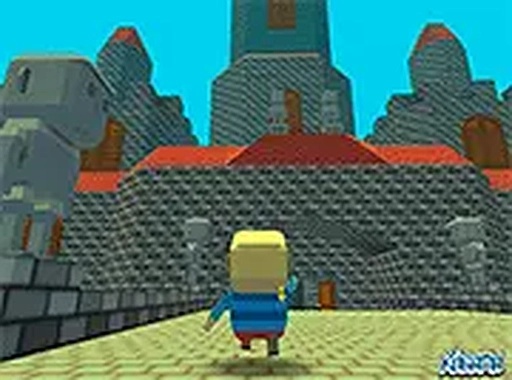
Castle Key Quest Puzzle delivers a focused maze experience: find every key, then reach the exit. Its bright, blocky castle and simple keyboard controls make it easy to pick up, while shifting key placements and expanding layouts keep later stages from feeling repetitive. There is no timer or combat pressure, so the difficulty rests on planning efficient routes. This suits families, casual players, and anyone who prefers thoughtful navigation over reflex testing. The main limitation is that players seeking action or complex mechanics may find the pace too gentle.
The core loop in Castle Key Quest Puzzle is straightforward but demanding: move a character through a network of connected pathways inside a castle, find every key, and then reach the exit. The exit door stays locked until the last key is collected. Because corridors wind and branch, the real challenge is planning a route that avoids doubling back. Players who map the layout mentally before moving tend to finish faster than those who wander.
Every level uses a different layout, mixing winding corridors, open rooms, and tucked-away alcoves. Key placement shifts from stage to stage, so memorizing one solution rarely helps on the next. Some levels ask you to collect multiple keys in a set order; others simply hide items in corners that are easy to overlook. That variation is what keeps repeated attempts from feeling like the same puzzle twice.
The castle is drawn in a bright, blocky style with simple shapes and clear color cues. Paths, keys, and doors are easy to distinguish at a glance, which matters when you are scanning a large maze. Movement uses standard keyboard input, and interacting with keys or doors is handled with a single key press. A full-screen mode gives a wider view of the maze, which helps on smaller displays.
Early stages teach basic navigation and key collection without much pressure. Later levels expand the play area and add more intricate routes, so the mental workload grows gradually. The game does not rely on timers or enemies to create tension; the difficulty comes from the layout itself and from deciding which path to take first. That makes it approachable for younger players while still giving older ones something to think about.
Sign in to comment
You must be logged in before posting a review or rating.
No comments yet. Be the first to comment!






Editorial Notes